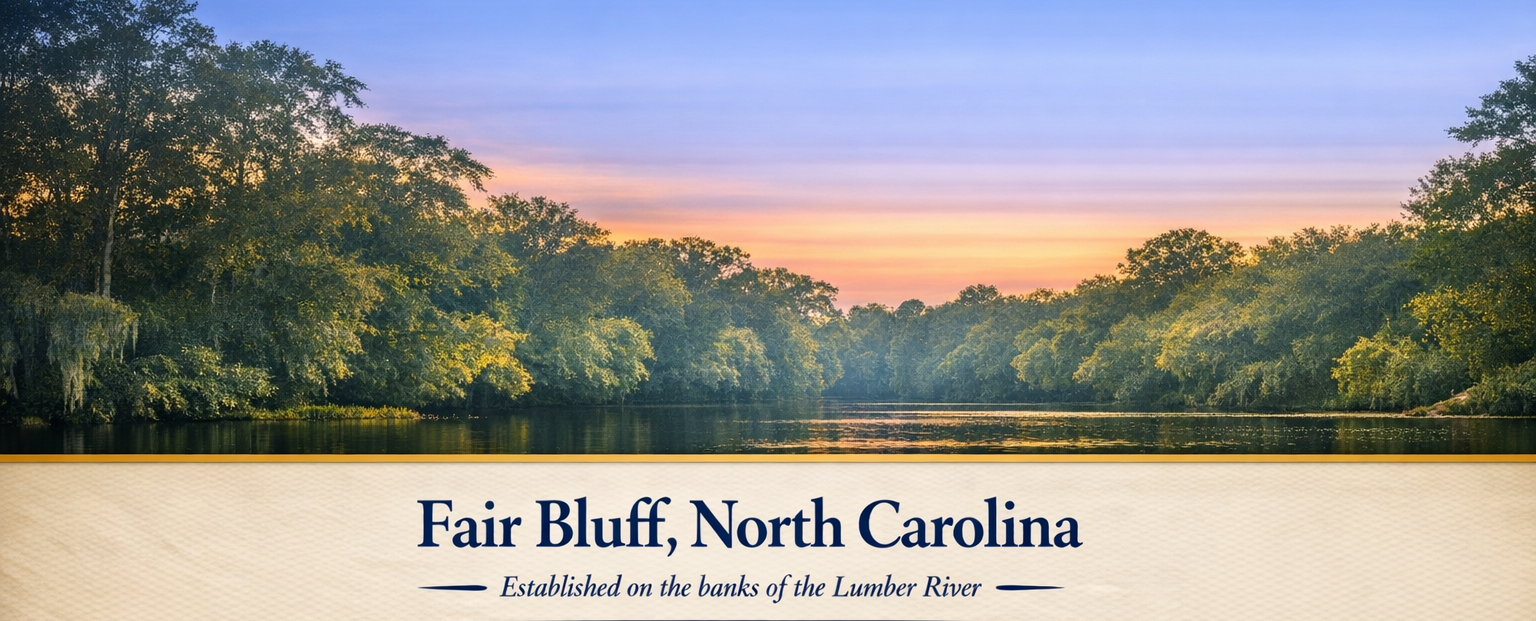
Fair Bluff, North Carolina, is nestled along the historic Lumber River, the only Blackwater National Wild and Scenic River in the state. Perched on a scenic bluff in Columbus County, Fair Bluff is a small town rich in history, natural beauty, and community spirit. Known for its river heritage, small-town charm, and local attractions such as the River Walk, Depot Museum, and Visitor’s Center, Fair Bluff offers a warm welcome to visitors and a strong sense of pride for those who call it home. Shaped by resilience and renewal, the town continues to honor its past while embracing a bright and promising future.